|
PC/104-Express |
Any I/O card can be easily converted to PC/104-Express..
PMC cards can be installed on a PC/104-Express stack by using PMC-to-PC/104-Express adapters.
Contact factory for availability of PMC-to-PC/104-Express adapters. |
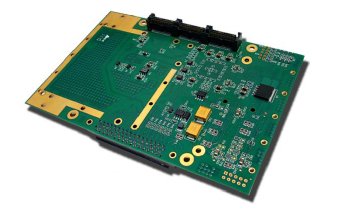
|
Data Acquisition |
|
General Standards Corporation is a leading supplier in data acquisition I/O boards, provides a complete family of
data acquisition cards for sonar, industrial, and embedded applications on several form factors/busses, and for many operating systems.
Functions available include analog I/O, serial I/O, and high speed parallel I/O.
|
Form Factors: | |
FREE DRIVERS
AND
LOANER BOARDS |
|
|
|
Software Drivers: |
- Windows
|
- VxWorks
|
- QNX
|
- Linux
|
- MathWorks
|
- Solaris
|
- Labview
|
- xPC Target
|
- Ask About Other Drivers
|
|


- Up to 64 Input Channels per Board
- Programmable Sampling Rates to 50M SPS
- GPS Synchronization
- Auto-Calibration
- Multi-Board Synchronization
- Sigma-Delta and Delta-Sigma Analog I/O
- Resolutions from 12 bits to 24 bits
Analog I/O Selection Tables
- Serial Mode Protocols include Asynchronous, Bisync, SDLC, HDLC, IEEE 802.3, Synchronous Telemetry, Simple Clock/Data ("-SYNC" product line), and Di-phase.
- Transceiver support RS485, RS422, RS232, RS423, V.35, RS530, as well as other software selectable mixed protocol modes
- Up to Eight Independent Serial Channels per Board
- Synchronous Serial Data Rates up to 10 Mbits/sec
- Asynchronous Serial Data Rates up to 1 Mbits/sec
- Deep Transmit and Receive FIFOs up to 128K
- PMC and cPCI rear I/O support
- Custom Protocols Available
Serial I/O Selection Tables
- Cable Transfer speeds up to 400 mb/per second
- Large FPGA provides for flexable cable interface
- Several cable transceiver options including RS-422, RS-485, LVDS, PECL, and TTL
Digital I/O Selection Table
|
|
|
Introduction to PCI/104-Express | |
The PCI/104-Express specification establishes a standard to use high speed
PCI ExpressR bus in embedded applications.
Incorporating the PCI Express bus within the industry proven PC/104
architecture brings many advantages for embedded applications including fast
data transfer, low cost due to PC/104's unique self-stacking bus, and high
reliability due to PC/104's inherent ruggedness.
The main objective in defining an addition of PCI Express to PC/104 was to
preserve the attributes that have made PC/104 so successful in embedded
applications, namely:
Compact: 3.6 by 3.8 inches (90 x 96 mm) module size;
Self-stacking: expands without backplanes or card cages;
Rugged, reliable connectors: reliable in harsh environments;
Four-corner mounting holes: resistance to shock and vibration;
Fully PC compatible: reduced development costs and time-to-market.
In addition, the design had to support automatic detection of up or down
stacking and had to have automatic link shifting to allow simplified,
universal add-on module designs.
The PCI/104-Express design approach provides a consistent and
interchangeable path for the stackable PC architecture across the PC/104
Embedded Consortium's 104, EPIC, and EBX form factors.
More Information
|
|
PCI/104-Express Specification Overview/strong> | |
PCI Express bus connector:
Four x1 PCIeR Links
One x16 PCIe Link (optionally configurable as two x8 Links, two x4 PCIe
Links, or two SDVO Interfaces)
Power: +3.3V, +5V, +12V, and ATX power and control signals and Power OK.
Summary of the basic specs of PCI/104-Express modules:
Number of PCI Express modules per stack -- 4 x1 and 1 x16 (host may
configure as two x4 or x8);
Stack direction - Stack up or stack down;
Data throughput PCI bus - 132 M Bytes/sec (26 times ISA);
Data throughput single x1 Link - 500 M Bytes/sec (4 times PCI);
Data throughput x16 Link - 8,000 M Bytes/sec (60 times PCI);
Total data throughput all Links - 10,000 M Bytes/sec (75 times PCI);
PCI Express bus power +5V power capability - 84 watts;
PCI Express bus power +12V power capability - 100 watts;
The PCI Express connector was specifically designed to match the PC/104
standard 0.600 inch (15.24mm) stacking height and standoff tolerances.
PC/104 stackable embedded PCs have followed the desktop PC.
PCIe/104™
PCIe/104 is PCI/104-Express without the PCI bus. Since PCI Express is
based on PCI technology, a PCI Express to PCI Bridge is a straightforward.
A comparison between a PCI/104-Express CPU and Stack and a PCIe/104 CPU and
stack shows that both easily support PCI Express and PCI add-in cards.
Copies of the PCI/104-Express Specification are available to individuals
and companies developing embedded systems. For further information, contact
the PC/104 Embedded Consortium at www.pc104.org.
|
|
Other PC/104 Specifications | |
The PC/104 Embedded Consortium maintains the PC/104T, PC/104-PlusT, and
PCI-104T specifications on the 104T form factor as well as the
specifications for the EPICT and EBXT form factors.
PC/104 is the original specification. It defined the 104 form factor at
3.550 x 3.775 inch. PC/104-Plus added PCI bus to classic PC/104 on the
104 form factor.
PCI-104 is the same as PC/104-Plus, except it does not have an ISA
connector.
|
|
Where Does PCI/104-Express Fit? | |
Where Does PCI/104-Express Fit?
The PCI/104-Express & PCIe/104 specifications continue to follow the desktop
PC.
PC/104 supports ISA only
PC/104-Plus supports PCI and ISA
PCI-104 supports PCI only.
The PC/104 logo, PC/104, PC/104-Plus, PCI-104, PCI/104-Express,
PCIe/104, 104 are trademarks of the PC/104 Embedded Consortium. PCI, PCI
Express, and PCIe are trademarks of PCI-SIG.
For more Info see:
http://www.pc104.org/pci104_Express_specs.php
|
|